Pusat Inovasi Kecerdasan Artifisial dan Teknologi untuk Demokrasi

Advancing AI for
Democracy

A leading regional hub for research, innovation, and policy advocacy at the nexus of artificial intelligence, digital technology, and democracy.

How we begin

Addressing the gap between AI and Democracy

The proliferation of Artificial Intelligence (AI) and digital technologies can enhance civic participation and government transparency, but they also introduce significant risks, including disinformation, deepfakes, and foreign influence campaigns that undermine democratic processes.

This dynamic environment creates an urgent need for a dedicated, expert-led institution to navigate the complex intersection of technology and democracy. Therefore, PIKAT was founded in 2024.

PIKAT aims to bridge knowledge gaps and inform related stakeholders. In practical, PIKAT will empower local voices and strengthen democratic engagement using the innovation of digital technology and AI.

Our Vision

To be the leading center for research, innovation, and policy advocacy at the intersection of artificial intelligence, digital technology, and democracy—at national, regional, and global levels.

Our Mission

PIKAT's sole mission is to strengthen democratic resilience in Indonesia and the wider Southeast Asian region. It achieves this by:

  • •Conducting actionable, evidence-based research;
  • •Developing and promoting human-centric ethical frameworks;
  • •Fostering multi-stakeholder collaboration to address challenges and leverage opportunities.

What We Do

Our Core Activities

We operate across four primary streams to ensure our impact on technology governance, policy, and capacity building.

Research Action

PIKAT actively researches specific interests in AI and democracy topics, supporting democracy, human rights, and technology governance.

Consultancy Services

We offer expertise to multilateral organizations, foundations, and government bodies. Includes AI Safety compliance, commissioned research, and policy analysis.

Trainings

Delivering capacity building on AI and digital technology, providing digital innovation, and producing creative content via digital platforms.

Technology Innovation

Developing state-of-the-art digital and AI technology from websites and apps to dedicated AI tools designed to foster democracy.

1,500+

People Trained

Across Indonesia & SEA

12+

Government Entities

National & Regional

30+

CSOs & NGOs

Civil Society Partners

15+

Global Networks

International Alliances

Our History

The Journey So Far

Key milestones in PIKAT's initiatives and achievements in shaping the future of AI governance.

January 2024

Founding of PIKAT

February 2024

Appointed as external consultant UN AIAB

April - December 2024

Involved at least five AI Advisory Board consultation meetings, providing input on draft reports and proposals for UN Independent Scientific Panel

June 2024

AI and Indonesia Election: Launch of First Research

July 2025

Collaboration with EA Indonesia, AIS2, and national governments to improve AI policy through Indonesia AI Safety Roundtable

February 2026

PIKAT at global conference in India AI Impact Summit

Leadership & Experts

Our Team

Expert-led institution navigating the complex intersection of technology and democracy.

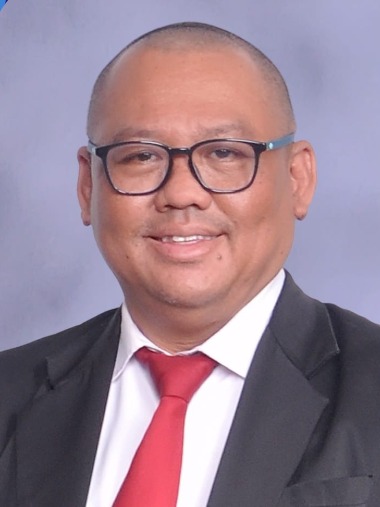
Damar Juniarto

Founder and Advisor

Damar Juniarto is recognized for his pioneering work in AI policy and advocacy. His efforts have significantly impacted the landscape of technology and democracy in Southeast Asia, promoting AI safety and responsible AI usage.

Damar's vision for PIKAT is to bridge the gap between technology and democracy, positioning the research center as a leading institution that addresses the unique challenges faced by the Global South in the digital age.

Anie Rahmi

Co-founder and Oversight

Anie is a strategic communication and public affairs professional with more than 20 years of experience spanning government communications, corporate affairs, stakeholder engagement, media intelligence, crisis management, and national media.

Her career combines experience in journalism, corporate communications, government communication strategy, and strategic advisory, enabling her to navigate complex stakeholder environments and high profile public issues.

Dara Meutia Uning

Co-founder and Treasurer

Dara was a journalist at Tempo Media for 6 years. She excels in writing and very passionate about research on social and political issues.

She has Bachelor degree in Criminology (University of Indonesia) and Master degree in Development Studies (University of Melbourne).

Hanif Abdul Halim

Chairperson and Senior Researcher

Hanif is a legal and policy expert specializing in digital governance, personal data protection, privacy, and AI governance, leading research on these areas at PIKAT.

He holds an LL.M. in Law and Technology from Utrecht University and has served as a team expert for Indonesia's Ministries and Agencies.

Kalimah Wasis Lestari

Secretary and Senior Researcher

Kalimah is a researcher specializing in artificial intelligence, digital politics, and digital democracy. She is also a lecturer at the Department of Political Science, Universitas Airlangga.

Her ongoing research focuses on the intersection of emerging technologies, political processes, and democratic governance.

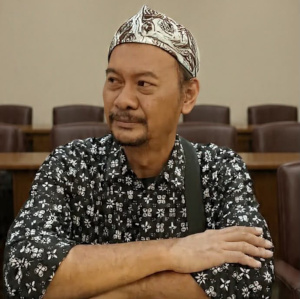
Rony Agung Rahmanto

Senior AI Developer

Rony has expertise in desktop, mobile and web-based software development. He has served as a senior developer in several companies and joined ARDWORT, an AI working group.

His tech stack includes Python, Go, Rust, C++, Java, PHP, JavaScript, HTML, and CSS. He also created the Sawa Programming Language, which is fully in Javanese script.

Andreas Hendra Santoso

Senior IT Practitioner

Proactive and results-driven IT Project Manager with 15+ years of experience delivering large-scale IT solutions and driving digital transformation initiatives.

Certified in PMP, ITIL, and Scrum, with a consistent record of delivering projects on time and within budget while fostering strong stakeholder relationships.

Syahriza Situmorang

AI Safety & Governance

He is a software engineer based in Japan and a graduate of Tohoku University. He previously co-founded the education initiatives Tentorin and FlashCampus, which reached over 3,000 students in Indonesia.

His interest in AI safety led him to participate in the Algoverse AI Safety Fellowship. He is now exploring how transformative AI could affect human decision-making and how Indonesia can better understand and respond to its risks.

Our Work

Publications & Research

Explore our latest articles, policy briefs, and academic journals advancing AI governance.

Disclaimer:

Below are writings by our researchers, including works published prior to and/or outside the scope of PIKAT’s activities. Each piece indicates publication year and, where relevant, the author’s affiliation at the time of publication. Copyright remains with the respective authors and/or original publishers; links are provided to the original sources. The views expressed in each piece are those of the author and do not necessarily reflect PIKAT. Older texts reflect the social, political, legal, and technological conditions present at the time of their publication and may not have been updated.

Journal Election AI Risk AI Governance

AI-Driven Campaigns: A Sign of a Shift from Democracy to Algocracy?

Kalimah Wasis Lestari 2026

This paper explores the structural transformation of political campaigning brought about by generative AI platforms like Pemilu.AI during Indonesia's elections. By analyzing how algorithmic tools automate campaign strategies, constituency targeting, and political messaging, the study highlights a fundamental shift from human-centered deliberation to data-driven decision-making. It cautions that while AI can optimize campaign budgets and outreach, over-relying on algorithmic optimization risks establishing an "algocracy"—a political order where algorithms quietly dictate political agendas and marginalize minority interests.

Reading this study is vital for AI governance and democratic resilience because it demonstrates how unmonitored election tech undermines democratic representation. It provides actionable insights for policymakers to establish strict oversight mechanisms, audit election algorithms, and enact campaign finance and transparency rules. By highlighting the systemic political risks of algorithmic influence, the paper lays the groundwork for enforceable safety protocols that keep human accountability and democratic choice at the core of elections.

Article AI Risk AI Governance

Indonesia’s largest AI experiment barely has safety net

Hanif Abdul Halim 2026

This commentary critiques the rapid deployment of large-scale AI initiatives by state institutions—such as automated data cleaning across public registries—without adequate data protection or safety guardrails. Halim warns against framing high-risk public sector AI deployments as administrative triumphs while ignoring the severe privacy and security vulnerabilities created for over 270 million citizens. The analysis exposes the hazardous gap between government enthusiasm for digital transformation and the actual institutional capacity required to manage AI systems safely.

This piece is an essential read for AI governance and risk management as it underscores the dangers of state-led AI adoption without robust regulatory frameworks. It serves as a stark reminder that public trust in democratic institutions depends on data sovereignty, rigorous algorithmic audits, and statutory safeguards. For digital rights advocates and policymakers, it offers a crucial framework for evaluating public-sector AI risks and demanding independent oversight to prevent state power from compromising civil liberties.

Article Media AI Risk

Pers Independen vs Bias AI

Damar Juniarto 2026

This article investigates the growing tension between independent journalism and automated information systems powered by synthetic intelligence. Juniarto details how generative AI models, trained on opaque datasets, frequently reproduce systemic biases, hallucinate factual errors, and drown out authoritative news outlets in the digital public square. The piece highlights the threat this poses to the news industry’s economic viability and its core civic role as a watchdog against disinformation.

For democratic governance, a free and critical press is indispensable; understanding how AI threatens media ecosystem integrity is paramount to safeguarding democratic debate. Reading this article helps media regulators, civil society, and newsroom leaders formulate AI adoption standards that protect editorial independence, demand training-data transparency, and mitigate algorithmic bias. It provides a strategic defense for preserving facts, independent journalism, and informed public debate against automated manipulation.

Article AI Risk

Supaya AI Tak Mencelakakan Manusia

Damar Juniarto 2025

Focusing on conversational AI safety, this article analyzes how commercial AI chatbots harvest and cite private user data without consent or contextual awareness. Juniarto uses real-world cases, such as Meta AI's data scraping practices, to illustrate the immediate privacy violations and psychological risks posed by unconstrained consumer-facing AI models. The commentary argues that without preventative safety-by-design principles, consumer AI products will continuously exploit personal data at the expense of human dignity.

This article is a crucial text for AI safety practitioners and privacy rights advocates seeking to build human-centric governance models. By examining the direct harms of algorithmic data scraping, it demonstrates why voluntary industry guidelines are insufficient to prevent civil rights abuses. Reading it offers key perspectives on structuring technical guardrails, mandatory impact assessments, and strict data protection enforcement to ensure AI serves human well-being rather than commercial extraction.

Journal Education AI Risk

ChatGPT and Legal Education in Indonesia: Examining Readiness and Implications

Hanif Abdul Halim and Haekal Al Asyari 2025

This empirical study evaluates the adoption and risks of generative AI tools like ChatGPT among law students in Indonesia, particularly during major legal reform transitions such as the rollout of the new Criminal Code (KUHP). The authors demonstrate that while generative AI provides quick conceptual explanations, it frequently struggles with local legal reasoning, generates outdated commentary, and creates false citations. The paper highlights the danger of law students developing an over-reliance on AI output without cultivating essential legal verification skills.

In the context of AI risk and democratic governance, this paper is vital because future legal practitioners, judges, and lawmakers form the backbone of the rule of law. If legal training is compromised by uncritical AI use, the integrity of legal interpretation and judicial systems is directly threatened. Reading this study enables academic institutions and legal regulators to design pedagogical strategies and verification literacy programs that uphold democratic legal institutions in an era of automated content generation.

Article AI Risk AI Governance

Artificial Intelligence dan Hal-hal yang Belum Selesai

Damar Juniarto 2025

This commentary maps out the unresolved policy, ethical, and legal dilemmas surrounding global and national AI governance. Juniarto highlights critical gaps in current regulatory frameworks, including the lack of accountability for AI-generated harms, labor displacement, corporate monopolies over model architecture, and weak public participation in technology policy. He argues that technological acceleration is rapidly outstripping slow regulatory responses, leaving citizens vulnerable to unchecked technological experimentation.

This work provides an essential roadmap for governance experts and policy architects aiming to strengthen democratic control over emerging technology. It reinforces the imperative that AI development must not be governed solely by market forces or technocratic elites, but must remain subject to public oversight and democratic constitutional principles. Reading it helps stakeholders identify structural governance deficits and advocate for comprehensive, human-rights-centered AI legislation.

Statement Privacy AI Risk

Joint-Statement: Urging Safeguards for Citizens’ Privacy & Independent PDP Authority

PIKAT Demokrasi & DDRN 2025

Issued by a broad coalition of civil society organizations, this joint statement demands the immediate establishment of an independent Personal Data Protection (PDP) authority and stronger privacy guarantees from the executive branch. It highlights how unchecked data collection by both state and private AI developers exposes citizens to mass surveillance, identity theft, and political discrimination. The statement stresses that effective privacy rights are a prerequisite for safely deploying AI across society.

This statement is a primary source document for understanding the institutional mechanics needed to enforce AI safety and protect civil liberties. Without an independent enforcement body, statutory privacy laws remain nominal, allowing high-risk AI models to exploit public data without accountability. Reading this document helps researchers and civil society leaders understand how institutional independence and public advocacy intersect to safeguard citizen rights against algorithmic overreach.

Article AI Governance

AI Development for the Global South

Hanif Abdul Halim 2024

This policy analysis critiques the global AI governance narrative, which is predominantly shaped by Global North priorities, technical standards, and commercial interests. Halim details how imported AI frameworks often fail to address the socio-economic realities, linguistic diversity, and state capacity constraints of Global South nations like Indonesia. The piece emphasizes the necessity of developing sovereign, localized AI governance models that prioritize inclusive development and digital sovereignty over tech colonialism.

For AI governance scholars and democratic reformers, this article is essential for breaking away from copy-paste regulatory approaches. It illustrates that true democratic resilience requires Global South countries to assert active agency in international AI standard-setting and build local safety infrastructure suited to their unique political contexts. Reading this piece provides key analytical tools for building equitable global AI governance that respects post-colonial democratic trajectories.

Article Election AI Risk AI Governance

AI and the 2024 Indonesian election: Are ethical guidelines enough

Damar Juniarto 2024

Written in the immediate run-up to the 2024 Indonesian general elections, this opinion piece evaluates the efficacy of voluntary ethical circulars issued by government ministries to regulate AI use in campaigns. Juniarto argues that soft law and non-binding guidelines are inherently insufficient to counter deepfakes, synthetic political avatars, micro-targeted disinformation, and voter manipulation. The analysis demonstrates how political actors exploit regulatory loopholes when legal penalties are absent.

This article is a foundational read for election security analysts and AI policy practitioners because it clearly articulates why soft law fails in high-stakes political environments. It makes a compelling case for transitioning from voluntary ethics to binding statutory regulations, complete with audit requirements and legal liability for platform providers and political campaigns. Reading it offers critical lessons on designing enforceable electoral guardrails to preserve voter autonomy and democratic legitimacy.

Journal Election

Evaluating electoral reforms and its consequences in Indonesia and Thailand (2000–2023)

Kalimah Wasis Lestari 2024

This comparative political study analyzes two decades of electoral system reform, institutional design, and party dynamics across Indonesia and Thailand. Lestari traces how shifts in electoral rules, candidate selection, and campaign regulations have reshaped democratic competition, party stability, and voter engagement in Southeast Asia. The historical analysis highlights structural vulnerabilities within electoral systems that leave them susceptible to elite manipulation and political polarization.

While rooted in electoral comparative politics, this study is crucial for AI governance scholars because digital campaign tools and AI technologies operate within existing institutional rule sets. Understanding historical electoral vulnerabilities enables reformers to anticipate how emerging AI tools—such as micro-targeting and automated propaganda—will interact with existing campaign laws. Reading this article provides the necessary institutional context to craft electoral regulations that address both traditional and tech-enabled threats to democracy.

Article Election AI Risk AI Governance

Akuntabilitas Platform dan Pemilu: Pelajaran dari Indonesia

Damar Juniarto 2024

This commentary examines platform accountability during election periods, analyzing how major social media and AI platforms handled election integrity, content moderation, and algorithmic amplification in Indonesia. Juniarto details how global platforms consistently under-resource content moderation and safety engineering in non-Western markets, allowing synthetic content, hate speech, and voter suppression campaigns to proliferate. The piece highlights the asymmetric power between multinational tech companies and national election authorities.

This text is essential reading for understanding the practical mechanics of platform regulation and election protection in developing democracies. It argues that meaningful AI safety requires mandating platform transparency, local language model safety alignment, and real-time data access for independent election monitors. Reading this article equips governance advocates with concrete lessons for holding global tech monopolies accountable to local democratic norms.

Article Election AI Risk AI Governance

Navigating AI’s Impact on Indonesia's Elections

Hanif Abdul Halim 2023

As an early warning prior to the 2024 electoral cycle, this article outlines the emerging risks of generative AI tools on voter perception, political discourse, and election management in Indonesia. Halim identifies key threat vectors, including AI-generated deepfakes of political candidates, automated astroturfing on social media, and algorithmic bias in voter information platforms. The commentary calls for proactive multi-stakeholder collaboration among electoral management bodies, tech firms, and civil society.

Reading this publication is vital for understanding the evolution of AI threat landscapes in electoral contexts. It offers an indispensable early roadmap for building democratic resilience before crisis moments occur, emphasizing public literacy, rapid-response fact-checking coalitions, and clear campaign disclosure rules. The article serves as a benchmark for evaluating how early governance warnings can be translated into proactive safety interventions for future elections.